
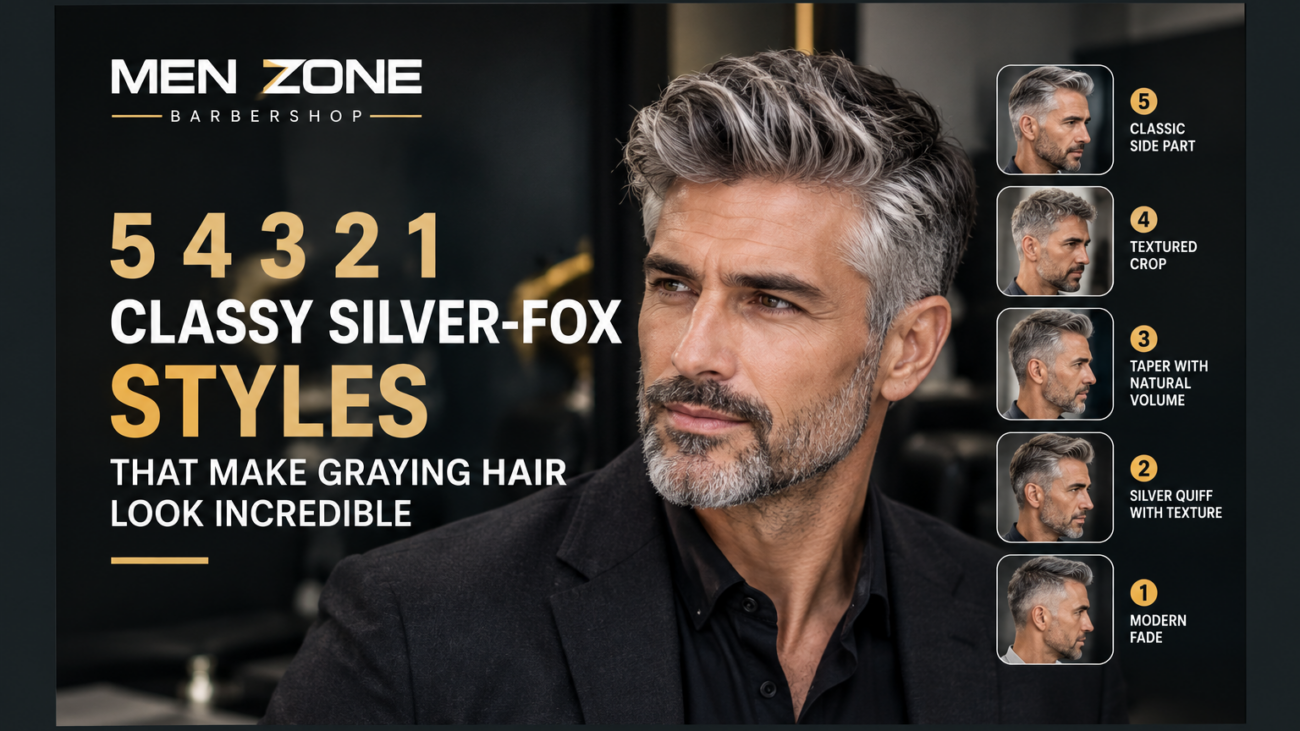
Graying hair is no longer something men need to hide. In fact, silver and salt-and-pepper hair can become one of the most distinctive parts of a man’s appearance when it is shaped correctly. The right haircut can make gray strands look intentional, polished, sophisticated, and remarkably modern.
The key is not simply choosing a haircut. It is about understanding how your natural gray pattern, hair density, face shape, texture, and lifestyle work together. A skilled barber can use length, texture, fading, and clean edges to turn naturally graying hair into a style that looks confident rather than accidental.
If you’re searching for a Barber Near Me, look beyond a quick trim. For silver-fox hair, precision and consultation matter because gray hair can have different textures and growth patterns compared with the hair you had when you were younger.
5. The Classic Silver Side Part
The classic side part is one of the easiest ways to make gray hair look refined without making the style feel old-fashioned.
Keep the sides neat while leaving enough length on top to create a natural part. Instead of making the hair extremely slick, ask your barber for controlled volume and subtle texture. This gives silver hair dimension while maintaining a sophisticated silhouette.
For men with naturally straight or slightly wavy hair, the side part can be especially effective. A small amount of lightweight styling product can provide control without making the hair appear greasy or overly stiff.
This style works particularly well for professionals who want a haircut that transitions easily from the office to dinner or a formal event.
4. Textured Silver Crop
A textured crop is an excellent choice for men who want their gray hair to look contemporary and low-maintenance.
The top can be kept moderately short and textured with scissors or carefully controlled clipper work. The sides can be tapered to create a cleaner outline while allowing the silver tones on top to remain the visual focus.
Texture is important because completely flattening gray hair can sometimes make it look heavier. Small variations in length create movement and help naturally different shades of gray stand out.
This is also a practical option for men who do not want to spend several minutes styling their hair every morning.
3. Silver Taper With Natural Volume
For men who like a fuller appearance on top, a clean taper combined with natural volume can create an exceptionally balanced look.
Rather than taking the sides extremely short, a barber can gradually reduce the bulk around the temples and neckline. The top remains longer, allowing the natural gray pattern to become part of the hairstyle.
This approach is particularly useful when gray hair is thick or has begun changing texture. Removing unnecessary weight from strategic areas can make the haircut easier to control without sacrificing fullness.
If you are looking for a Haircut Louis St. Laurent, consider explaining whether you want your gray hair to look fuller, sharper, softer, or more textured. That information can help your barber determine how much length to preserve.
2. Silver Quiff With Controlled Texture
A silver quiff brings more personality to gray hair while keeping the overall appearance mature and polished.
The barber keeps extra length toward the front and top, then gradually blends the sides. The front can be styled upward and slightly backward rather than pushed into an exaggerated pompadour.
The secret is moderation. Too much height can make the haircut difficult to manage, while too little texture can make it look flat. A controlled quiff creates enough volume to highlight silver strands without overwhelming the face.
This style can be especially flattering for men with oval, square, or longer face shapes because the height can be adjusted according to facial proportions.
1. The Modern Silver Fade
At number one is the modern silver fade — a style that combines the sophistication of gray hair with the crisp appearance of contemporary barbering.
The sides and back are gradually faded or tapered while the top is customized according to hair density and texture. Some men may look best with a short textured top, while others benefit from keeping several inches of length.
The beauty of this haircut is flexibility. Silver hair can look completely different depending on how the top is cut. A skilled barber can create a sharp contrast between the clean sides and naturally dimensional gray hair without making the result look artificial.
For men who want their gray hair to become a defining feature, this is one of the strongest options.
Choosing the Right Silver-Fox Style
The best gray hairstyle depends on more than age. Your hair texture, density, growth direction, face shape, and daily routine should all influence the final cut.
For example, thick gray hair may need internal weight removal, while finer gray hair may benefit from keeping additional length to maintain visual fullness. Curly or wavy gray hair can also require a different approach because texture becomes more noticeable as the hair changes color.
Before sitting in the chair, think about how much time you realistically want to spend styling your hair. A great haircut should work with your natural hair instead of forcing you to fight it every morning.
A Real-Life MEN ZONE Example
Imagine a client in his late 40s who has naturally dark hair mixed with prominent silver around the temples, sides, and front. His previous haircuts kept the sides too bulky, which made the transition between dark and gray hair look uneven.
At MEN ZONE, the approach could start with understanding his natural growth pattern and determining where the bulk is creating the most visual weight. The barber could then clean the sides with a controlled taper, preserve appropriate length on top, and add subtle texture through the silver sections.
The result would not attempt to hide the gray. Instead, the haircut would make the silver pattern look deliberate and sophisticated. This is the real advantage of professional barbering: the goal is not to make every client look the same, but to make their natural features work better together.
Why Professional Cutting Matters for Gray Hair
Gray hair can have a surprisingly different feel from pigmented hair. Some gray strands may be wirier, while others can appear softer or more resistant to styling. This means a haircut that worked perfectly several years ago may no longer produce the same result.
A professional barber can compensate for these differences by changing cutting angles, removing weight selectively, and adjusting the amount of texture.
If you’re considering a Barber Louis St. Laurent, take a photo of a hairstyle you like and explain what you like about it. Even better, tell the barber what you dislike about your current haircut. These details can make the consultation much more productive.
For example, instead of saying, “I want it short,” you could say, “I want the sides clean but not extremely tight, and I want enough length on top to show my natural silver texture.” That gives your barber a much clearer direction.
Where to Get Your Silver-Fox Look
When choosing a barber, the quality of the consultation is just as important as the finished haircut. Gray hair often looks best when the barber works with its natural color variation instead of trying to make every section identical.
For clients visiting the Stoney Creek area, a professional grooming experience can be found at 1334 S Service Rd Bldg G2, Unit#1, Stoney Creek, ON L8E 5C5, Canada.
MEN ZONE Barbershop focuses on creating men’s hairstyles that balance clean barbering with individual character. For a silver-fox transformation, the goal should be a haircut that looks sharp immediately after the appointment and remains manageable as it grows.
How to Maintain a Silver-Fox Haircut
A great haircut still needs simple maintenance.
Use a shampoo and conditioner appropriate for your hair type rather than washing aggressively every day. If your hair becomes dry or coarse, a moisturizing routine can help improve manageability.
When styling, start with a small amount of product. You can always add more, but using too much at the beginning can make silver hair look heavy or dull.
Regular trims also matter. Even when you want to grow the top longer, cleaning the neckline, sideburns, and perimeter can keep the overall haircut looking intentional.
You might also like: The Lazy Guy’s Guide to Eliminating Beard Dandruff Permanently
The Silver-Fox Mindset
Going gray is not a style problem that needs to be solved. It can be a style opportunity.
Silver hair can add contrast, character, and maturity to almost any modern haircut. The difference between looking unkempt and looking effortlessly sophisticated often comes down to shape, texture, and maintenance.
Whether you prefer a classic side part, textured crop, controlled taper, silver quiff, or modern fade, the right haircut can make your natural gray hair one of your strongest style features.
A visit to MEN ZONE Barbershop can be the starting point for finding the version of the silver-fox look that fits your personality, hair texture, and everyday routine.
FAQs
1. Is gray hair suitable for modern hairstyles?
Absolutely. Gray hair can look excellent with fades, tapers, textured crops, quiffs, side parts, and many other contemporary styles. The haircut should be adapted to the hair’s natural texture and density.
2. Should I keep my gray hair long or short?
There is no universal answer. Shorter styles can make gray hair look crisp and controlled, while longer styles can showcase natural silver variation and texture. Your hair density and face shape should guide the decision.
3. Does gray hair require different styling products?
Not necessarily, but many men find that gray hair responds better to products chosen for their specific texture. If your gray strands are coarse or wiry, a lightweight moisturizing or conditioning approach may improve manageability.
4. How often should I maintain a silver-fade haircut?
A fade generally looks its sharpest when the sides and neckline are maintained regularly. The ideal schedule depends on how quickly your hair grows and how precise you want the haircut to remain.
5. Can a silver-fox haircut make me look younger?
A well-shaped haircut can create a cleaner, more contemporary appearance, but it should not try to disguise your natural age. Modern styling, controlled texture, and clean edges can make gray hair look confident and polished.
6. What should I tell my barber before getting a gray-hair haircut?
Explain how much styling time you want, what you dislike about your current haircut, how short you want the sides, and how much length you want to preserve on top. Showing a reference photo can also help communicate your desired shape.
7. Is a fade a good option for older men with gray hair?
Yes. A properly customized fade can create a sharp transition around the sides while allowing the silver hair on top to remain the focus. The fade should be selected according to hair density, face shape, and personal style rather than age alone.